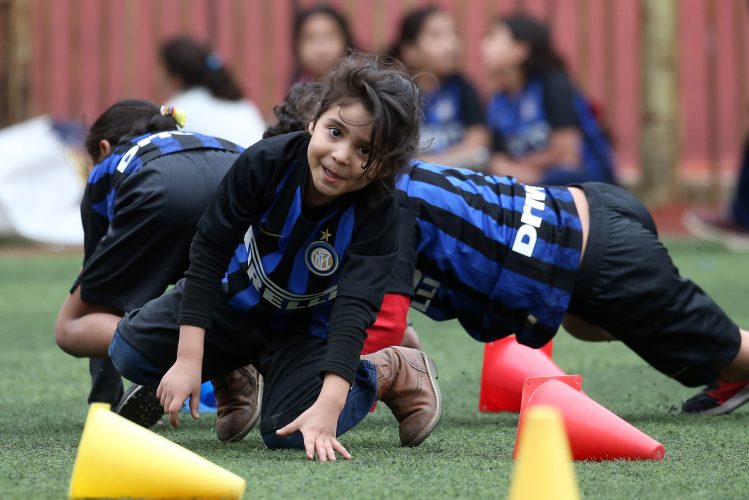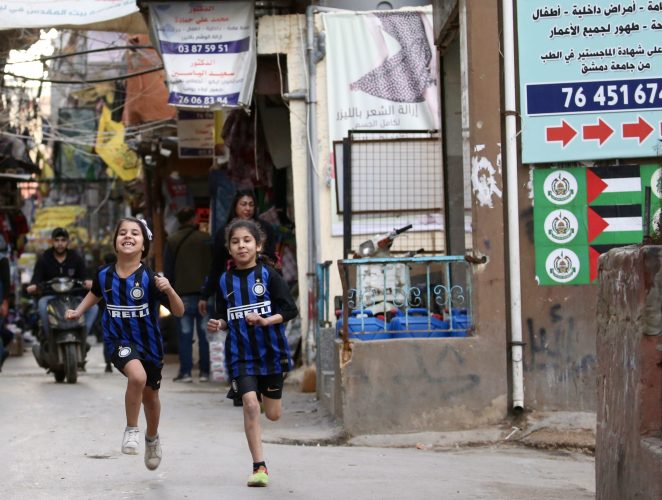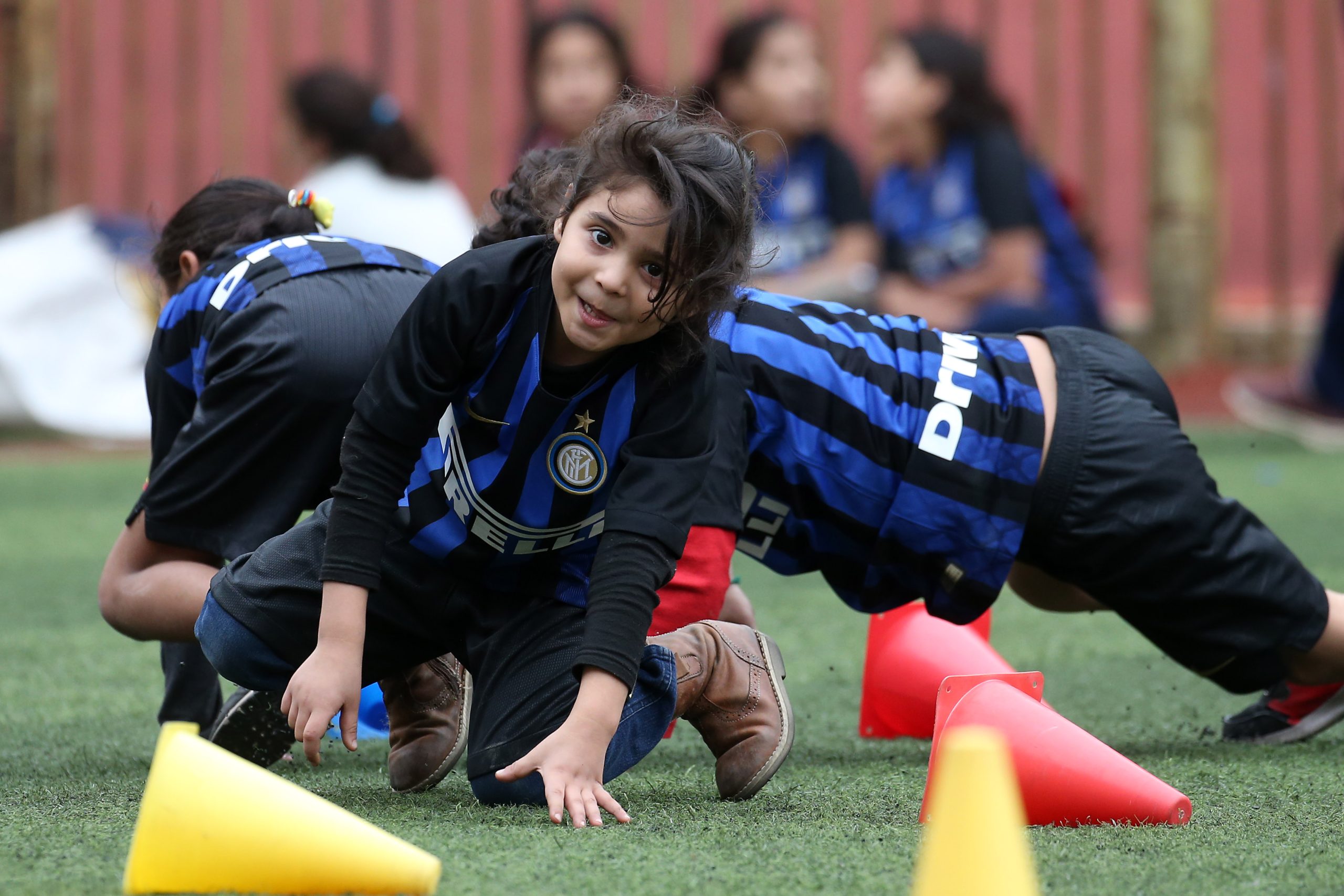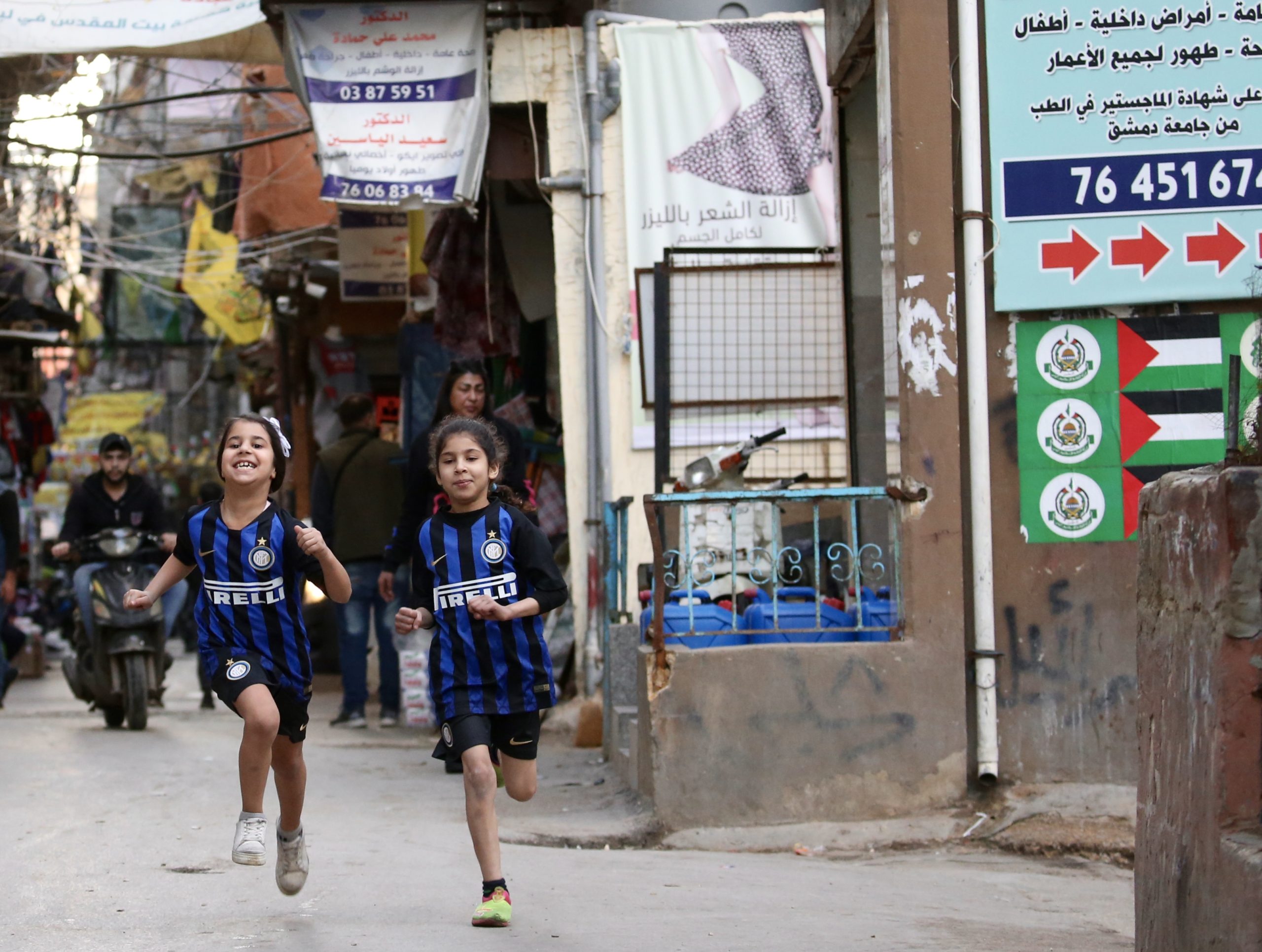




Beirut – Sila, Rama, Yasmin, Hannadi are girls from the Shatila Inter Campus group which involves 80 girls and boys from the Lebanese refugee camp. They first met on the football pitch two years ago and have been inseparable ever since. “Inter Campus made us discover our passion for football. So, we often wear our Inter shirts, even off the pitch, running through the narrow streets, and when the World Cup was on we didn’t miss a single match. We obviously cheered on all the Inter players!”.
The sadly famous refugee camp of Shatila, was, in the early 80s, already the scene of one of the bloodiest pages of the political-religious clashes in those territories, it is a place that does not offer many opportunities to its approximately 35 thousand inhabitants and in which women’s sport specifically has no outlets. It is for this reason that parents, especially the mothers of our little intercampisti, welcomed the project with great enthusiasm, supporting it and allowing their girls and boys to all play together on the same pitch, demonstrating a cultural openness that is not common in a society of the Middle East. However, we are learning to understand that every decision is the result of a complex intertwining of situations that should not and cannot be superficially and easily catalogued by the West…
“Unfortunately, there have been some cases where parents did not allow their daughters to come and play on the pitch and practice a sport like football”, the project coordinator Othman Afifi tells us – “the road is still long, but we are satisfied with the feedback we’ve gotten so far. The mothers even want to play football themselves, and we hope we’ll be able to accommodate them soon!”
The commitment and determination of the local coaches—all born and raised in the refugee camp—is fundamental to offering girls and boys the chance to play together, to interact, and to share a common activity, overcoming those sharp separations that often involve girls and young women in traditional dances, isolating them from their male peers.
In a context where many civil rights are lacking due to the complex socio-political situation in which the inhabitants of Shatila are forced to live, the Inter Campus project, thanks also to the collaboration with the NGO Anera, takes on an even broader value, promoting gender equity and setting goals such as the prevention of social deviance and support for education.