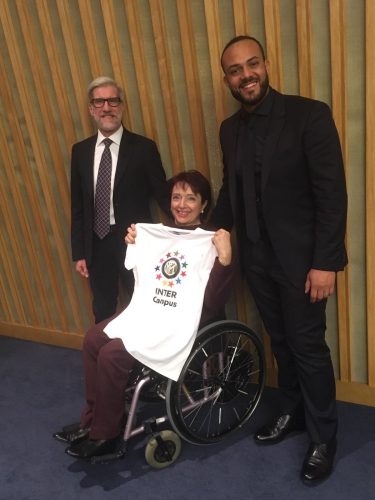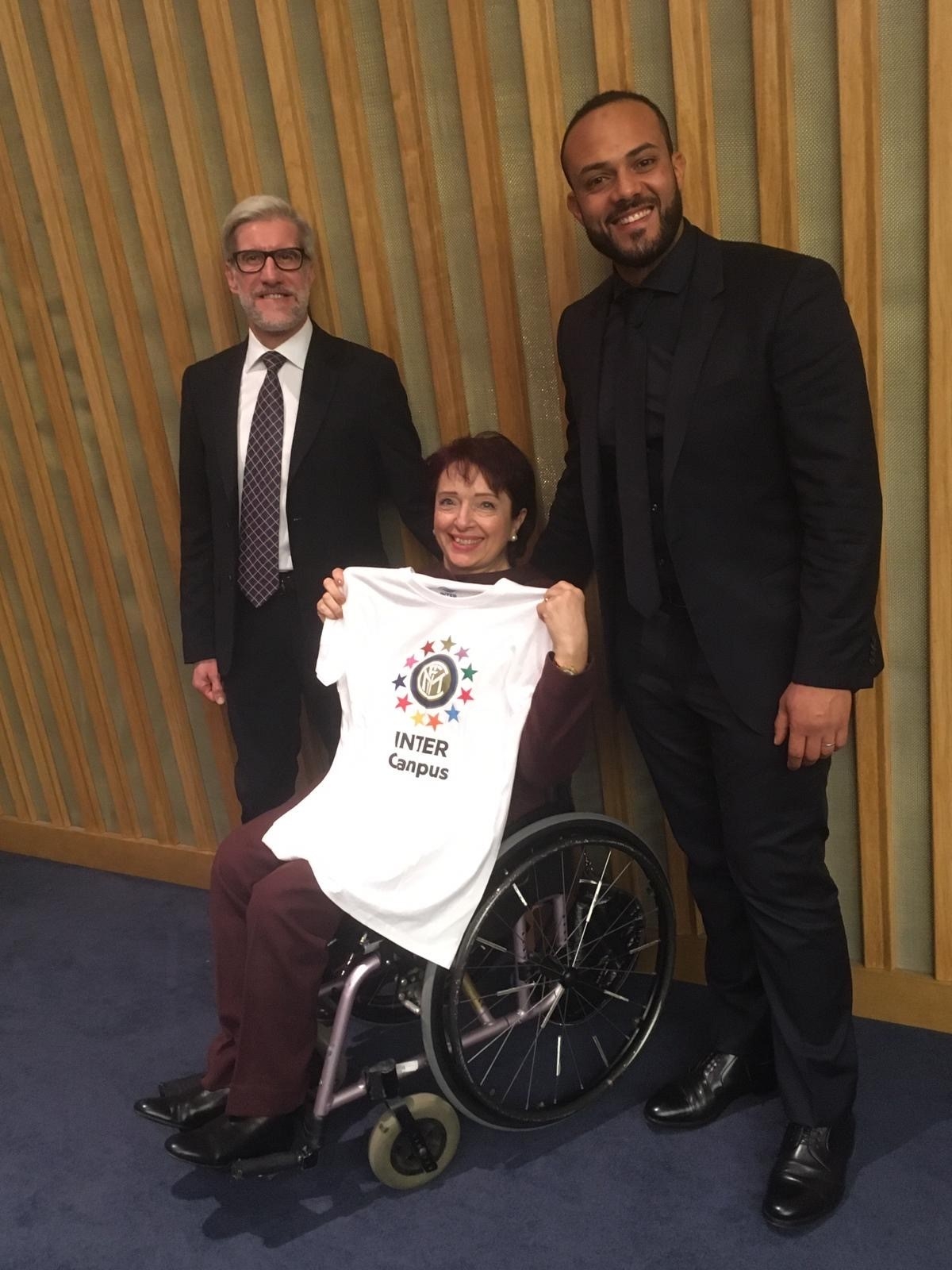


New York – Following our last interview with Carine N’Koué, Project Manager for the UEFA Foundation for Children, it was the turn of Daniela Bas, originally from Friuli but an American by adoption, to delve into the role of sport in relation to the objectives of the 2030 Agenda for sustainable development.
To the first question: what is the relationship between SDGs (Sustainable Development Goals) and sport, Daniela Bas retorted, asking: “How much time do I have?” Indeed, the topic could be explored and dissected so extensively that it would require entire days… Naturally, on our channels, we dedicate about half an hour to our guests, and so Ms. Bas, ironically replied: “I’ll condense my Treccani into a Bignami!” and began to explain with the simplicity and clarity of someone who masters their subject and loves their work.
“Sport is a very important contributor to economic and social, but also environmental development—three fundamental dimensions of human life—not just sport but physical activity in general—and its role is recognized by various governments, including in the political declaration of the 2030 Agenda, established in 2015 by 193 UN member states, with its 17 sustainable objectives, meaning they are self-regenerating, ideally to be achieved by 2030. The preamble of the Agenda reflects on sport as a tool to empower women, young people, all individuals, and various communities, and it states that sport is a facilitator of development and peace,” explains Daniela Bas, who since 2017 has directed the Division for Inclusive Social Development of the United Nations Department of Economic and Social Affairs, a global reference point for the mandate on sport, development, and peace.
“The United Nations and Inter Campus promote human dignity. Through play, Inter Campus gives roots to that seed, the child, who, if well-nourished, can grow into an oak! Play strengthens self-esteem, the ability to interact constructively, teaches the art of leadership, the capacity for teamwork, respect for the planet and for people, contributing to the formation of model citizens. All of this can only further promote the 2030 Agenda, and when it concludes in 2030, these young model citizens will be the ones to carry the torch forward.”
Social inclusion and disability: what are the guidelines for the future? Ms. Bas explains how the UN’s response is, on one hand, to continue advocating for the application of conventions on the rights of children and persons with disabilities, and on the other, to highlight the need for a review of policies in light of what the pandemic is teaching us, seeking to further promote abilities and facilitate convergence between the needs and capacities of children with and without disabilities. And to rethink transformative resilience: “with sport, we can provide new, innovative cultural, developmental, and hopeful infrastructures. We can re-promote solidarity, community work, and collaboration, contributing to the well-being of all. Like a puzzle, all different pieces united in a single picture. Countries must speak to each other if we want to live in a peaceful world.
If Inter Campus teaches its children, through sport, the importance of diversity, it is forming the generations that will allow the world to continue dialogue, a fundamental work that we, as the United Nations, promote every day.”
A rich and beautiful conversation concludes with Ms. Bas’s invitation to continue on the path of cooperation and collaboration between two entities that have so much in common: full steam ahead with Goal 17, partnerships for the goals!