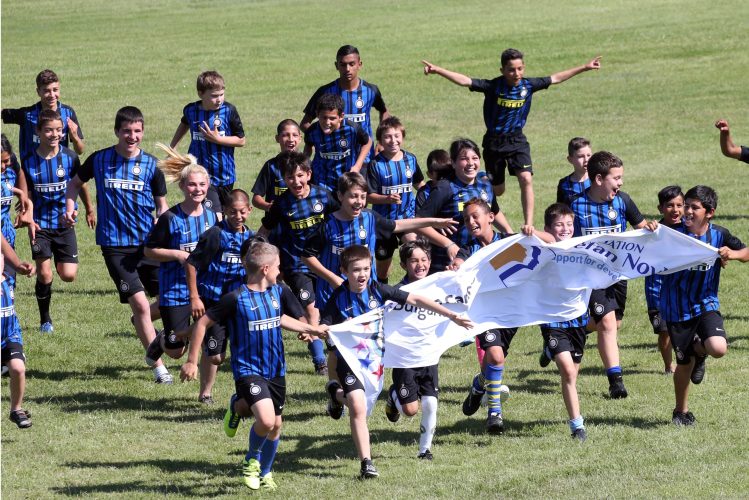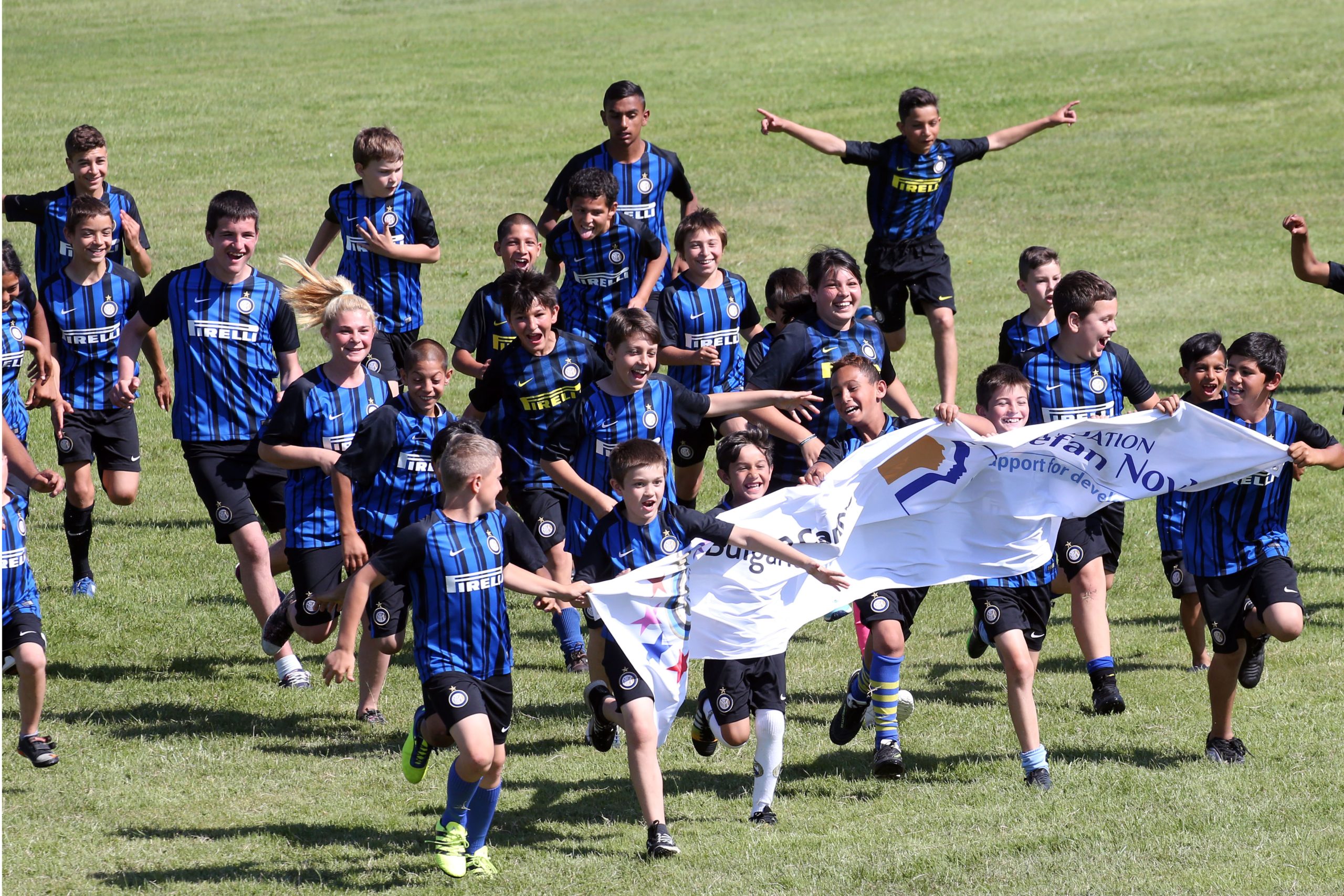




Our local partner in Bulgaria is the Stefan Noykov Foundation, represented by Dr. Paolo Giulini, a lecturer in Developmental Psychology at the Catholic University of Milan, a criminologist, and the founding President in 1995 of the Italian Centre for the Promotion of Mediation, which is involved in Italy in providing psychological help to violent men with the objective of protecting women. He comes from an Interista family, and in addition to having established a solid collaboration with FC Internazionale through numerous sports mediation projects, his Bulgarian roots on his mother’s side led him in 1997 to unite his love for the Nerazzurri colors with his own background, initiating a strong cooperation with Inter Campus. He established the Stefan Noykov Foundation, which, with a social and philanthropic spirit, carries out both artistic-cultural and sports-related projects (with Inter Campus), focusing attention on the most vulnerable minorities in various social spheres.
We have been in Bulgaria since 1997, striving to adapt our intervention to the mentality and needs of the Bulgarian people. Bulgaria has been traversed by peoples such as the Thracians, then the Greeks, and the Romans, later becoming a cultural hub for Slavic peoples during the Early Middle Ages. After a period of Byzantine rule and the rebirth of the Second Bulgarian State, the territories fell under the control of the Ottoman Empire for approximately five centuries. The Russo-Turkish War led to the birth of the Third Bulgarian State, recognized in 1908. The subsequent years saw numerous conflicts with neighboring peoples. In 1946, it became a communist republic governed by a single-party political system until 1989. After 1990, Bulgaria became a democracy with a market economy, and the long transition from one economic system to another created significant social problems. Since 2007, it has been part of the European Union, and the persistence of socioeconomic disparities among member countries fosters underpaid and precarious labor. Restrictive migration policies encourage immersion in illegality.
The immense migratory flow of Romani populations from Northern India (Punjab and Rajasthan) began centuries ago. Today, the Romani in Bulgaria constitute the densest minority in Europe, speaking Bulgarian, Turkish, or Romani depending on their religious affiliations.
The sociocultural condition of Romani populations does not always align with traditional Bulgarian society. It often happens that Romani children end up in orphanages, entrusted to state institutions where, as they grow older, their hopes of being adopted drastically diminish. Inter Campus plays a fundamental role in these growth pathways, aiming to educate through play, utilizing the values of sport such as altruism, solidarity, respect for opponents, as well as respect for women, to foster inclusion with the multiple objectives of preventing juvenile delinquency, bullying, and generalized anxiety disorders typical of adolescence.
The Stefan Noykov Foundation and FC Internazionale, through the Inter Campus project, use sport to facilitate social inclusion by encouraging children’s school attendance and gender equality. Furthermore, important objectives also include ethnic-religious integration and peace between the Romani population and the indigenous population, who seemingly coexist in the same territory but in reality inhabit two parallel worlds.
Inter Campus is a project that provides a long path of integral personal development during childhood, these are the years that shape a person, a long journey that prepares children for the complex world of adolescence. Often, Romani girls living with their families are forced to interrupt their participation in the project and accelerate their natural development, completely skipping a fundamental stage of growth; from children, they are forced to become women, without an intermediate adolescent phase. Too often, at a very young age, they are compelled into early pregnancies and arranged marriages by their own parents with men they have never known before.